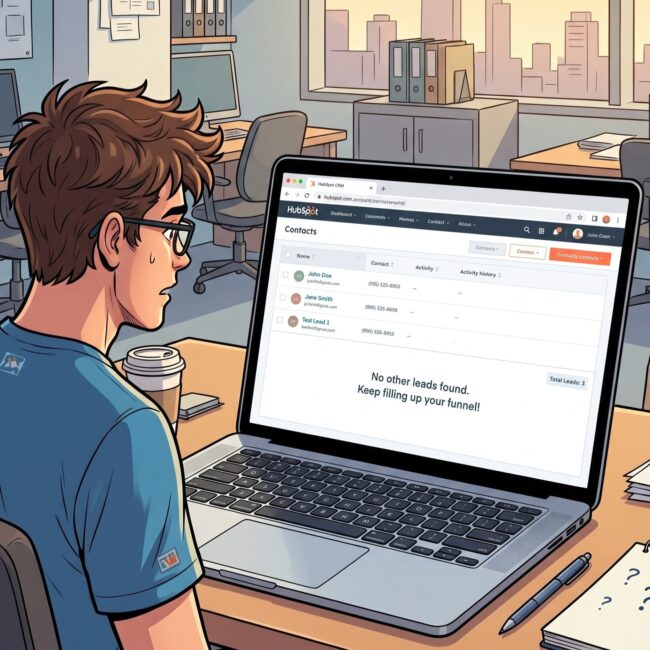
The first few customers came through warm intros and founder relationships. Then the calls started slowing down.
This isn’t a sales problem. .
The founder-led sales to marketing transition isn’t about fixing the pitch. It’s about fixing the source. Every warm intro has a natural ceiling, and most seed-stage companies hit it between customer 10 and 20. What stops working is the source of conversations, not the sales process.
Key Takeaways
- The warm-intro ceiling is predictable. Hitting it doesn’t mean the sales motion is broken.
- Transitioning to marketing means building a system that generates conversations with people outside the founder’s network.
- The foundation (ICP, positioning, one tested channel) must exist before any marketing hire makes sense.
- The first 90 days should produce one channel that works, not five channels started.
- This is still a building role (full-stack senior marketer), not a building role (C level marketing exec).
When Founder-Led Sales to Marketing Becomes Urgent
The signal is specific. Meetings are fewer. The CRM shows deals in progress but not enough new ones entering. The founder asks the team to “work their networks.”
The instinct is to fix sales: better sequence, more reps, sharper pitch. Sometimes that’s right. But when the root cause is a thin top of funnel with no refill mechanism, better sales execution just optimizes a shrinking pool.
What actually happened: the founder closed the first cohort through trust that was pre-built. People bought because they knew the founder, or knew someone who did. That trust doesn’t automatically expand to strangers.
Building a marketing engine is how companies generate trust with people who’ve never met the founder.
What Transitioning to Marketing Actually Means
Most articles conflate this with building a sales team. More reps, structured outbound, a RevOps stack. That’s one part of scaling go-to-market. It’s not the marketing transition.
The marketing transition is about generating interest from people outside the founder’s existing network. The goal isn’t to replace warm intros. The goal is to stop depending on them.
Three things have to be true before systematic marketing can work:
Positioning clarity. A precise answer to who this is for and what it changes for them. Not a product description. Positioning that explains the specific situation the buyer is in, the outcome they get, and why this product delivers it better than alternatives.
Content that earns attention. Two jobs: capturing search traffic from buyers actively looking for solutions, and being shareable enough that buyers pass it along. Generic category education earns neither. The company’s actual expertise, clearly expressed, does.
A lead generation system that doesn’t require the founder to be in the room. Early pipeline was relationship-driven. The founder was the relationship. Systematic marketing means channels and conversion mechanisms that work when the founder isn’t present.
What to Build Before You Hire Anyone
This is where most founders make the expensive mistake. The hire happens first. The foundation gets built second, by someone who didn’t do the positioning work and doesn’t understand the early customer base.
The foundation comes first.
A documented ICP. Not “mid-market B2B SaaS.” A specific profile: job title, company size, the trigger event that moves them to evaluate, the internal stakeholder who signs off. Detailed enough that a new hire can qualify a lead without asking the founder. Built from the first 10-15 customers, not internal assumptions.
Positioning that has been tested. Run past real prospects. The language has survived objections. The value prop lands without a 20-minute explanation. A positioning doc written in a conference room and never shown to a prospect isn’t positioning. It’s a draft.
One channel hypothesis, actually tested. Not a five-channel plan. One channel: SEO, LinkedIn, community, partnerships, paid. Whichever fits the buyer’s behavior and the company’s ability to execute consistently.
The First 90 Days of the Founder-Led Sales to Marketing Transition
Days 1-30: Positioning sprint. Audit existing messaging against real buyer language. Talk to the first 10 customers about how they describe the problem. Close the gap between how the company describes itself and how buyers actually understood the value.
With a cybersecurity startup stealth-to-launch build, this positioning work determined everything downstream. Every channel, every piece of content, every sales deck was grounded in language stress-tested against real buyer conversations.
Days 31-60: First channel in motion. Pick one. Build the infrastructure: the content calendar, the publishing cadence, the distribution mechanism. Produce the first five to ten pieces. Track what gets traction. Adjust.
Days 61-90: First non-referral leads. A lead that came in through content or search, with no prior relationship with the founder. Even one or two in the first quarter validates the channel and the positioning. The 90-day frame is a checkpoint, not a promise.
When to Hire vs. When to Use Fractional Help
The CMO hire conversation comes up early. The instinct is to hire senior, hire fast, and hand the problem off.
At seed stage, that’s almost always the wrong sequence.
A CMO is a scaling role. It assumes there’s a team to manage, a channel mix to optimize, a pipeline that already generates leads. At seed stage, there’s none of that. The job is building the engine from scratch: positioning, content, lead gen, website, collateral. Operator work, not executive work.
What seed-stage companies need is someone who builds the engine themselves. That means either a strong marketing generalist as the first hire, or fractional engagement with someone who executes directly.
The hire threshold: a working channel producing consistent leads, a content pipeline that needs managing, and enough scope that one person can’t handle it alone. Before that point, it’s premature.
FAQ
What’s the difference between founder-led sales and founder-led marketing?
Founder-led sales means the founder is the primary closer, using their relationships and credibility to win deals. Founder-led marketing means the founder’s voice and expertise drives content and brand, but the pipeline is built systematically rather than through personal outreach. Most seed-stage companies need to transition through both phases before hiring a dedicated marketing function.
When should a B2B startup stop relying on referrals?
Referrals never fully stop. The goal isn’t to replace them but to stop depending on them. The signal to act is when the pipeline slows and there’s no clear mechanism to generate new conversations other than hoping someone passes along the company name. At that point, systematic marketing determines whether the company grows or stalls.
How long does the transition from founder-led sales to systematic marketing take?
With focused execution, positioning clarity, one channel, and first content assets, most companies can see the first non-referral inbound leads within 60-90 days. The timeline depends on how much positioning groundwork exists and how quickly the founder makes decisions about ICP and messaging.
What’s the biggest mistake founders make when building their first marketing engine?
Building too many channels at once. The instinct is to run SEO, LinkedIn, ads, and email simultaneously because each might work. Spreading effort across five channels before one is working means none of them work. Pick one channel, make it produce results, then build from there.
Should a seed-stage startup hire a CMO or use a fractional CMO?
At seed stage, most companies aren’t ready for a CMO. The CMO role is a scaling role that requires a team to manage. What seed-stage companies need is an operator who builds the marketing engine themselves. A fractional CMO who also executes is the right fit for this stage.
The starting point isn’t a marketing hire or a channel strategy. It’s a clear picture of who the first customers were and what they actually bought. That’s the ICP. From the ICP comes positioning. From positioning comes a channel that makes sense. From one working channel comes the confidence to build the second.
The warm-intro pipeline did its job. It proved the product works. What comes next is building the system that works without it.